Definition and Origins
The sanctions shadow is the part of the oil trade that runs around Western sanctions, mainly oil from Russia, Iran and Venezuela. That oil does not vanish from the market. It is sold to countries that do not apply the sanctions, usually at a discount, because shipping, insurance and payment are harder and riskier.
Nobody has a reliable count of how much oil moves this way. Estimates from different sources vary widely, so we do not give a total.
How the Sanctions Shadow Emerged: Russia, Iran, Venezuela
Russia: after Russia's invasion of Ukraine, the EU banned seaborne imports of Russian crude from 5 December 2022 and of petroleum products from 5 February 2023. The EU and the G7 also introduced a price cap, first set at 60 USD a barrel for crude (Council of the EU, 3 December 2022). The EU's 18th sanctions package lowered it to 47.60 USD with an automatic adjustment, and since 1 February 2026 it has stood at 44.10 USD (European Commission, 15 January 2026). According to S&P Global (23 July 2026), the EU froze that level for one year in July 2026.
Iran: after leaving the nuclear deal, the US reimposed sanctions on Iran's energy sector, including petroleum-related transactions, effective 5 November 2018 (White House, 6 August 2018).
Venezuela: on 28 January 2019 the US sanctioned the state oil company PdVSA (US State Department, 28 January 2019).
Mechanics: Shadow Fleets, Relabeling, Price-Cap Tricks
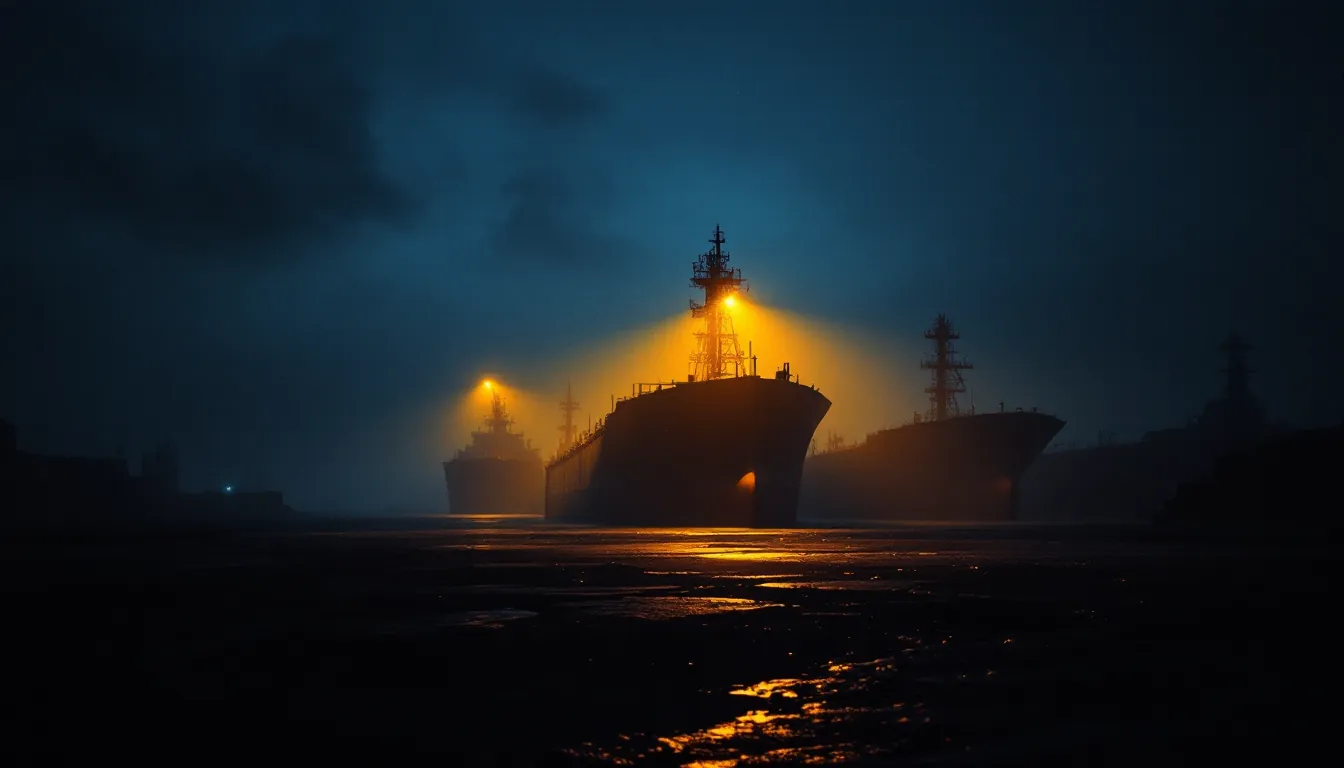
Shadow fleet: tankers that carry sanctioned oil outside the usual Western insurance and services chain. They are often older ships sailing under flags of states with light oversight, and they change owners or flags.
Concealment: typical patterns are switched-off or spoofed position transponders (AIS), ship-to-ship transfers on the open sea and paperwork that states a different origin. Authorities and analytics firms use satellite images and vessel data to spot such voyages.
Price cap: the cap does not ban Russian oil. It lets EU operators provide shipping and related services only if the cargo was sold at or below the cap (European Commission, 15 January 2026). A seller that does without those services, with its own fleet and its own insurance, is barely affected, and that is why the shadow fleet matters.
What does this mean for my heating oil bill?
Heating oil and diesel are priced off Brent and the gasoil market. Sanctioned oil that still reaches the world market through detours adds to supply, even if it never comes to the US or Europe. How much that dampens Brent has not been reliably measured.
The reverse also holds: if tighter sanctions or enforcement suddenly took those barrels off the market, supply would tighten and heating oil and diesel could get more expensive. By how much and how fast cannot be forecast reliably.
Risks and open questions
Where the sanctions shadow goes depends on political decisions that cannot be predicted. These questions decide how much sanctioned oil keeps flowing:
- Enforcement: how consistently do authorities list individual vessels and pursue breaches?
- Price cap: under the January decision the European Commission was to review the cap every six months (European Commission, 15 January 2026); in July 2026 the EU froze it for a year, according to S&P Global. What happens after that is open.
- Buyer countries: major buyers such as China and India do not implement Western sanctions, and their purchasing helps decide where the oil goes.
- Talks and escalation: political agreements can ease sanctions; escalation can tighten them.
For you: plan heating-oil orders by tank level and need. Sanctions news explains price moves, but it does not tell you when to buy cheaply.